
Coffee roasts are identified by their color: light, medium and dark. Although these are not the most accurate terms for describing different roasts, as some coffees are naturally darker or lighter than others, they are convenient ways to categorize roasts. When purchasing coffee, you should expect different characteristics from a light roast, a medium roast, and a dark roast.
Light Roasts Retain Most of the Original Coffee Characteristics
Light roasts have a light brown, tan, color and lack of oil on the roasted beans. They have the highest acidity and are the brightest of the three roast levels.
The characteristics of different origins are most pronounced in light roasts, as are the qualities of the individual coffee. Much of the taste comes from the original coffee, which is why light roasts are often used for cuppings.
Light roasts are sometimes called Half City, Light City, New England, or Cinnamon roasts.
Medium Roasts Balance Acidity and Body
A medium roast will have a darker brown color than a light roast and will look richer. Some of the coffee’s oils may be visible on the beans, as well.
At this roast level, the coffee’s qualities begin to give way to the roast’s flavors and aromas, creating a balance between acidity and body. You’ll still be able to taste the original coffee, but the beans’ brightness will be complemented with the fuller body that is introduced by the roasting process.
Medium roasts go by City, Breakfast, Regular, and American roasts.
Dark Roasts Showcase Bold Bodies and a Richer Taste
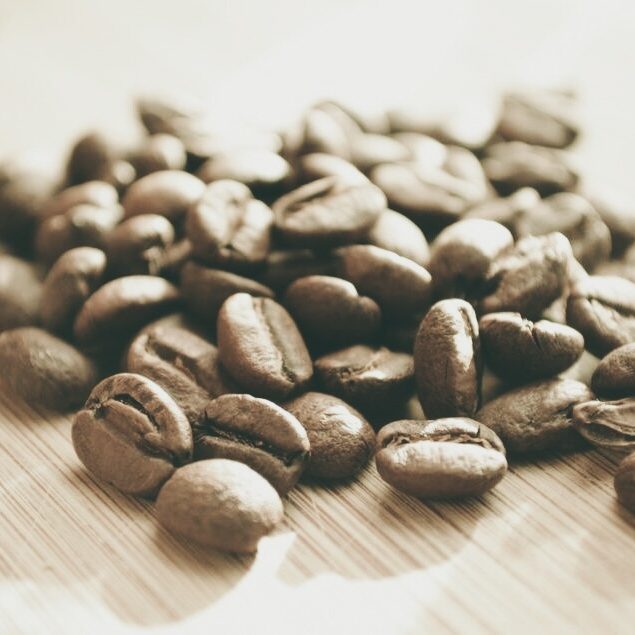
Dark roasts are dark brown, sometimes almost black, in color. They resemble chocolate, if it was shaped like a coffee bean. Oils can be seen on the beans at this point.
Oils can be seen on dark roasted beans.
When drinking a dark roast, you’re almost exclusively tasting notes from the roast. The brightness of light roasts is replaced with body in dark roasts. Because the original coffee’s qualities are mostly lost at this roast level, it’s difficult to pick out the characteristics of a specific coffee’s origin or lot.
Historically, dark roasts have been popular in Europe, giving rise to terms such as Continental, Italian, French, and Spanish roasts. Espresso roasts are also usually dark roasts, which is partly why espresso can stand up to lots of milk and sugar.
Roast level is largely a personal preference, as each level produces different qualities in the coffee. Knowing whether you prefer light, medium or dark roasts, though, can help you identify new coffees that you might like.
Try a Driftaway Coffee subscription that starts with a tasting kit, and includes four different coffees with different roast levels. We believe tasting is the best way to figure out which coffees (and roast levels) you like!



Thanks for this Scott, love ya man.
Many times in coffee shops you get two different drip choices: light roast coffee, or dark. Though overlooking the distinctions between the growing regions they come from, they’re typically offered as, simply, light or dark – http://coffeelounge.net/light-roast-coffee/
This is fascinating to me because the coffees I got in my 4 testing samples were all near cinnamon roasts – dry tan beans.
[…] https://driftaway.coffee/roastlevels/ […]
[…] What’s the Difference Between Light Roast, Medium Roast & Dark Roast? […]
[…] What’s the Difference Between Light Roast, Medium Roast & Dark Roast? […]
[…] What’s the Difference Between Light Roast, Medium Roast & Dark Roast? […]
[…] this introduction to our four roast profiles, Mom will have a chance to truly compare different roasts. She’ll have a chance to see firsthand how roast influences flavor and body, and we’ll gladly […]
[…] this introduction to our four roast profiles, Mom will have a chance to truly compare different roasts. She’ll have a chance to see firsthand how roast influences flavor and body, and we’ll gladly […]
[…] Roast Levels–What’s the Difference Between Light Roast, Medium Roast and Dark Roast, we explain how roast levels impact coffees. We examine the difference in appearance and flavor, […]
[…] Roast Levels — What’s the Difference Between Light Roast, Medium Roast and Dark Roast? […]
yeah, this was FASCINATING (all your coffee info pages. I only just started drinking it). I got here via google just for the info. But now I’m going to see what you’re selling.
…Right after I make a cup of dark roast from the assortment I have, since I assumed there wasn’t much difference (I only started drinking it since I didn’t know it was palatable with raw sugar, a LOT of cream and some vanilla.) And to think I wasted all that money on caffeine pills as a kid.
[…] yet as soon as they are roasted, usually, at around 400°c they change from seed to aliment. The roasting preferences also vary greatly from place to place. France, Italy and Germany for example like dark roasts, these give the coffee […]
Google
Check beneath, are some absolutely unrelated websites to ours, on the other hand, they’re most trustworthy sources that we use.
Google
Here are some of the web sites we advocate for our visitors.
[…] yet as soon as they are roasted, usually, at around 400°c they change from seed to ailment. The roasting preferences also vary greatly from place to place. France, Italy and Germany for example like dark roasts, these give the coffee […]
Does this affect if a coffee tastes more “watery”? i’m interested in having a strong flavor with K-Cups. I bought one and the coffee is not tasting as i would like because i like strong.
Its actually pretty interesting how many things can make your coffee taste watery. Through personal experimenting I’ve noticed a few factors:
-quality of coffee brewer (cheap ones will almost always brew watery with some exceptions)
-quality of coffee (better brands will need less coffee grounds while cheaper brands typically require more coffee grounds to counteract the watery taste)
-how hot the coffee gets and how long the coffee sits before drinking (usually if you have a cheap brewer, you will have to let your coffee sit there in the heat so it can fully release all the coffee compounds. If you try and drink right away it will taste watery. Higher quality brewers will brew at a higher heat and are usually good to go once brewing is done)
-what type of cup you use. (Oddly, this matters. I notice that if I have everything else perfect, my plastic travel mug will always change the flavor of the coffee to watery, no matter what I do. Coffee inside ceramic always tastes best to me. Metal is okay but I prefer ceramic. It has something to do with how porous the material is)
A keurig will almost always make good coffee because it heats the coffee enough so that its ready to go. But even so a plastic travel mug always seems to alter the taste.
I am using a Kcup machine i bought at Macy’s. I used kcups that says medium roast, but the flavor is not strong as i would like. Is like drinking water instead of coffee. Which one is suppose to have strong flavor, light roast or medium trough dark?
It could be light, medium, or dark. That really doesnt affect if coffee is strong or not. If you want coffee to be strong and not taste watery you have to use more coffee and make sure you’re using a good brewer. When you say “k-cup brewer” I’m assuming you mean a sunbeam, hamilton, or cuisinart brand maybe and not keurig? Unfortunately this matters. You’re brewer may mot be heating the coffee grounds to a high enough temperature for the grounds to release the full amount of compounds, thus you end up with watery coffee.
A Cuisinart, yes.
I would use a coffee press to get a good strong cup of coffee. Just one of my personal preferences. A press doesn’t have to be expensive and it makes a delicious and strong cup.
[…] profile is a medium roast. It’s a little darker than our Balanced Profile, but it still lets a coffee’s origin characteristics […]
[…] machines, most roasters roast Sumatran selections dark. This builds on their body and adds a roast-induced richness to the […]
[…] striking pour-overs are made from wood, which is selected for a specific roast level. For instance, the Cherry Edition is recommended for medium and dark roasts, the Walnut Edition is […]
[…] Additionally, it’s unlikely that these chemicals are present in a cup of coffee. For, coffee is roasted to 400+°F and brewed at 200°F. These chemicals evaporate at these […]
[…] There are many coffee varietals, too many to cover in just one piece. These varietals showcase the history and significance of varietals, though. Virtually all coffea arabica varietals came from Typica, Bourbon or both. Mundo Novo, Pacamara and Catuai are varietals that were discovered in Brazil, all around the same time, and yet they produce vastly different coffees. Mundo Novo is thick and sweet; Pacamara is citrusy and floral; and Catuai holds up well during roasting. […]
[…] Cow milk has a sweet flavor, especially when it’s heated to around 130°F. At this temperature, the sugars in the milk are especially sweet, which is why properly made cortados, cappuccinos and lattes taste sweet even without adding sugar. Because cow milk has a natural sweetness, it pairs well with any roast level. […]
[…] Roast Levels – What’s the Difference Between Light Roast, Medium Roast & Dark Roast… […]
[…] as long as you take good care of them and keep them clean. Not only that, but you can count on a strong roast when you use permanent coffee filters, which means you’ll enjoy great tasting coffee every […]
[…] will certainly find lots of different types as it pertains to caffeine. Many people like the full-flavor of dark-roast, yet others choose a taste that’s sleek as well as modest. In addition, you might likewise […]
[…] Roasts: Also referred to as Cinnamon Roasts, light roasts have a very light brown color and is considered more mild. There’s no oil left […]
[…] What’s the Difference Between Light, Medium & Dark Roast? […]
[…] What’s the Difference Between Light, Medium & Dark Roast? […]
[…] What’s the Difference Between Light, Medium & Dark Roast? […]
[…] What’s the Difference Between Light, Medium & Dark Roast? […]
[…] What’s the Difference Between Light, Medium & Dark Roast? […]
Light roast has a flavor. The rest is just burned vegetation….thanks to Starbucks educating America to not know what coffee even is. They even used to have a chart in the store showing you that a bean needed to be burnt first. Once you burn it, it all tastes the same: burnt; it matters not what blend. Then, since it tastes so bad, you put ‘stuff’ in it. Coffee is black, anything added is because it tastes too bad to drink or you don’t like coffee. PERIOD. It is either a light roast or you should just go to a donut shop.
You’re obviously very passionate about coffee, and that’s good for you. But your statement is also pretty ignorant. I won’t comment on Starbucks because it makes no difference to me how a particular chain likes to prepare their coffee, but there’s nothing wrong with adding to coffee. Do you eat your steak unseasoned and raw? If so, then great. I like mine cooked to varying temperatures and sometimes with a good rub or marinade. It’s whatever the dish or recipe calls for; and they’re all still steak for whomever to enjoy, however they wish. People drink coffee however they like. If coffee wasn’t the foundation for their specific recipe then it wouldn’t be coffee; but just because they added something doesn’t mean it’s not coffee anymore or that they don’t appreciate the ingredient for its characteristics.
Well, I see you know nothing about coffee or the evil man that runs Starbucks; ingnorance is bliss, no?…LMFAO! People add stuff to coffee because it tastes so bas. Go to Costa Rica and try some real coffee….sheep.
Search “The Real Reason Coffee at Starbucks Tastes Bitter and Burned” and get educated…if you dare…LOL!
SO wrong…hahaha!
So factual. They buy bulk crap and over roast it so it has no flavor…light roasted you’d spit it out. Google ‘why I hate starbucks’…there are some good facts there… if facts matter to you…unless you are a liberal, then don’t bother with facts…why change now.
[…] What’s the Difference Between Light, Medium & Dark Roast? […]
[…] few minutes afterward, you will hear the second crack that will create a medium roast coffee. It is the best time to take it out and cool it down. If you wait too long, that can result in […]
[…] Driftaway coffee […]
[…] they put in it. Also, integrated grinders tend not to play well with oily beans, which means dark roasts are typically off limits. That’s not the case if you get a standalone grinder, especially if […]
Coffee is love!! I used to enjoy the light roasts! But it seems that dark roasts are fun too! I work till very late night, so I need to be awake for a long time, how much of dark roasts should I use while working in the midnight? Will it have a bad impact on my body? getacoffeemaker
Does the type of roast affect caffeine content in general?
[…] Roast Levels – What’s the Difference Between Light Roast, Medium Roast & Dark Roast… […]
[…] retain the most characteristics from their origin beans. With dark roasts, you’re usually tasting the roasting more than the bean itself. Light roasts will also have slightly more caffeine, while dark roasts will show more oil on the […]
[…] licht, medium en donkere roast.Foto: Driftaway Coffee Zoals uit bovenstaande uitleg blijkt, verschillen de Dark en Light Roasts behoorlijk in smaak. Toch […]
[…] Dark roasts often are said to taste very earthy, burnt, or woodsy. It is easy to tell which bean is a dark roast because they are quite dark in color and the oils from the bean are brought to the surface. Most of the taste is from the roast itself and not the bean. […]
[…] roasts have traditionally been popular in Europe, and so-called Espresso and French roasts are practically always […]
[…] the light roast, medium roasts are meticulously heated for longer and at a higher temperature. While these beans do retain some […]
[…] https://www.seattlecoffeegear.com/learn/coffee-101/articles/coffee-roasts-shades-flavors https://driftaway.coffee/roastlevels/ http://www.manualcoffeebrewing.com/what-is-the-best-water-to-use-when-making-coffee/ […]
Cool article. I drink cofee every day. I want to buy milk frother: https://milkfrothertop.com/capresso-froth-plus-milk-frother-review/ I like milk in coffee anr tea)
[…] is light brown and there is a light body. If they are in the form of beans, there will be no oil. Most of the caffeine is retained and it is also the one that is most […]
[…] some caffeine does dissipate in the roasting process, the amount lost is negligible. By the time a light and a dark roast are brewed, any difference in caffeine levels that are a result of roasting will be imperceptible. […]
Google
Here are a few of the internet sites we recommend for our visitors.
[…] Download Image More @ driftaway.coffee […]
[…] https://www.seattlecoffeegear.com/learn/coffee-101/articles/coffee-roasts-shades-flavors https://driftaway.coffee/roastlevels/ http://www.manualcoffeebrewing.com/what-is-the-best-water-to-use-when-making-coffee/ […]
[…] En esta etapa, el grano solamente mostrará los signos de que un segundo crack es inminente. En este punto, las cualidades naturales del café y su brillo se complementan con un cuerpo más consistente que es introducido con el tueste, creando un equilibrio entre la acidez y el cuerpo. […]
[…] Coffee roasts are identified by their color: light, medium and dark. Although these are not the most accurate terms for describing different roasts, as some coffees are naturally darker or lighter than others, they are convenient ways to categorize roasts. When purchasing coffee, you should expect different characteristics from a light roast, a … https://driftaway.coffee/roastlevels/ […]
[…] https://www.seattlecoffeegear.com/learn/coffee-101/articles/coffee-roasts-shades-flavors https://driftaway.coffee/roastlevels/ http://www.manualcoffeebrewing.com/what-is-the-best-water-to-use-when-making-coffee/ […]
[…] Download Image More @ driftaway.coffee […]
I love Frothing, And This Site is provide all baout Frothing, And Milk Frother Reviews
[…] buy the right beans next time. Broadly, coffee beans are roasted light, medium or dark. There’s a lot of nuance in those classifications, but the important thing to know is that the roast level affects the flavor of your final brew. In […]
[…] buy the right beans next time. Broadly, coffee beans are roasted light, medium or dark. There’s a lot of nuance in those classifications, but the important thing to know is that the roast level affects the flavor of your final brew. In […]
[…] buy the right beans next time. Broadly, coffee beans are roasted light, medium or dark. There’s a lot of nuance in those classifications, but the important thing to know is that the roast level affects the flavor of your final brew. In […]
[…] said, if you have to consider a low acid coffee, a darker roast might be a better choice. It’s not a clear science yet. So while darker roasts work better for most people, some will find […]