
For people who want to enjoy great coffee at home and are already brewing their coffee correctly, the next step is to begin grinding their own coffee. Unless you’re making a mistake in the brewing process, no adjustment to your home-brewing regimen will have a larger impact than investing in a grinder. Here’s why grinding coffee is so important, and how you can do it easily.
Burr Grinders Provide Consistent Grinds
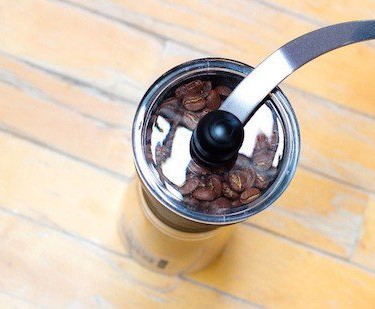 If you don’t have a grinder already, you’ll find two types of grinders: blade and burr. We strongly recommend a burr grinder. Some people opt for blade grinders, because they’re cheap. There are many burr grinders for less than $100, however, and some start at as little as $40. You don’t have to spend a lot of money on a grinder if you’re just starting to grind coffee at home, but save up the little extra for a burr grinder.
Burr grinders are much better than blade grinders, because burr models provide a consistent grind. Blade grinders chop beans like a food processor. They might pulverize some beans and barely break up others. Burr grinders, in contrast, pass beans between two burrs. The beans are broken up by the burrs until they’re the correct size, and they drop into a collection chamber once they’re broken up. The grounds will be the same size, ensuring a consistent extraction when you brew them.
If you don’t have a burr grinder, here are some recommendations for different budgets.
Coffee Should Be Ground Immediately Before Brewing
As we discussed in “Why Won’t You Grind My Coffee?,” one of the most frequent requests we receive is to grind customers’ coffees. The post goes into greater detail as to why we politely decline to grind coffee before shipping it, but the answer is essentially that flavor is lost in the grinding process.
Coffee should be ground just before brewing, because aromas are released during the grinding process. Any time you’ve smelled wonderful coffee in a cafe or the coffee aisle of the grocery store, it’s from aromas that are released as the beans are broken up. These aromas are full of flavor. In fact, they’re some of the most flavorful compounds in the coffee.
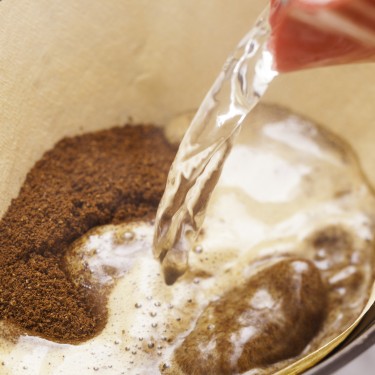 These aromas can greatly add to a cup’s flavors, but they disappear quickly. The only way to capture them in a cup is by brewing immediately after grinding so that the aromas enter the brew’s water instead of the air. If you’re brewing a pot of coffee, aim to brew the grounds within a few minutes of grinding. If you’re making espresso at home, try to use the grounds within 1 minute of grinding them. Because the grounds used for espresso are extremely fine, the aromas will escape even more quickly.
(For this reason, manual grinders, which take several minutes to grind a batch of beans with, aren’t recommended for espresso. The aromas from the first ground beans will be gone by the time the last few beans are ground.)
Choose the Grind Setting Based on Your Brew Method
Once you have a burr grinder and are ready to grind right before brewing, all that’s left is to select your grind setting. The grind should be set according to your brew method. Find your brew method on the chart and you’ll see the grind setting you should use:
|
Grind Setting |
Grind Description |
Brew Methods |
|
Extra Coarse |
Grind contains large particles, but beans are still thoroughly broken up. Slightly larger than kosher salt. |
Cold-brew/Toddy |
|
Coarse |
Grind contains distinct particles. Similar to kosher salt used for canning and pickling. |
French press |
|
Medium-Coarse |
Gritty, but no slivers of grinds. Similar to coarse sand. |
Flat-bottomed filters, namely automatic coffee makers |
|
Medium |
Feels slightly smooth when rubbed between thumb and finger. Slightly smaller particles than table salt. |
Cone-shaped filters, including manual poor overs and automatic coffee makers |
|
Fine |
Smooth, but can still feel individual grains. Finer than sugar but not quite a powder. |
Espresso |
|
Extra Fine |
Cannot feel individual grains. Powdered sugar or flour consistency. |
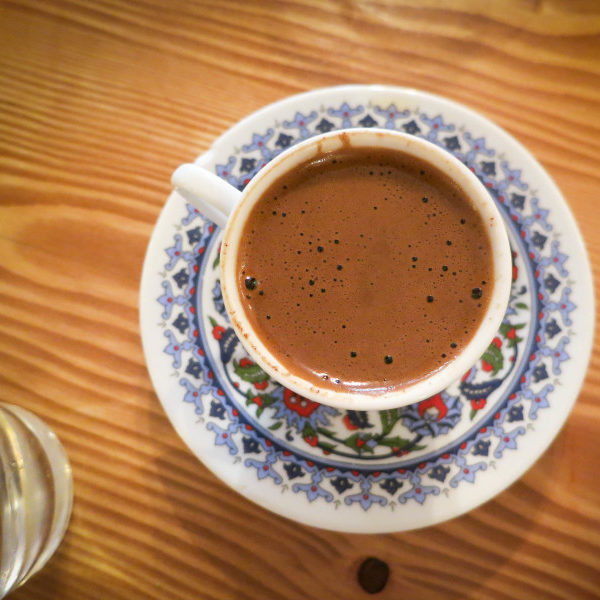
Turkish coffee |
Simply set your grinder to the proper setting, and start grinding your coffee. If you haven’t used your grinder before, you may need to adjust the setting a couple of times. Don’t grind all of your beans until you have it properly adjusted.
If you’d like to improve your home-brewed coffee and aren’t already grinding coffee at home, invest in a grinder. If you are grinding your coffee at home and still want to enjoy better coffee, try our coffee. The first shipment’s only $4, a fraction of what a grinder does, and you’re free to cancel if it’s not better than your current coffee.



[…] Driftawaycoffee – Penjelasan tentang Grind […]
[…] Scott, A comprehensive coffee grinding guide, 27/8/2015. […]
[…] we don’t recommend using a manual grinder when brewing with the Aeropress or any espresso-like brew method. You should use an automatic burr […]
[…] if you think you’re using the proper grind setting, you might want to check out our Comprehensive Coffee Grinding Guide to make sure. It lists and describes the correct grind setting for most brew […]
Hey Scott, I appreciate your thoughts on grinding, Thank you. I’m gonna start grinding at home. I use a French Press, and have been for years, but Don’t use the coarse grind. I always use a more medium to med/fine grind, as i think you get more out of your coffee, AND you get the “Cream” on top!! ;) Outside of it being a little easier to push the press down with a coarse grind…. Why does everyone still recommend a Coarse grind for French Press? Thx!!! My best, Tommy
[…] Once ground, coffee beans begin to deteriorate and the essential oils and aromas begin to dissipate within a matter of minutes. […]
[…] everyone’s tastes and preferences are different, the more grind settings you have to play with, the […]
[…] may be curious about why grind size matters. It all comes down to […]
I recently bought a Felicita Coffee Scale online and it does help a lot with your coffee servings. I mean I’m not a pro but i like my coffee just right. Maybe you guys should give it a try, it’s a pretty good product I thought it was going to be one of those cheap products that stopped working 2 weeks in, but 4 months later my scale still works just fine and i has a cool design to it.
If you are interested you can buy it at https://felicitascale.com/shop-now?olsPage=products
The main problem with the “we will not grind your coffee for you” is the arrogance of assuming you know what is best for me. I drive a long-distance truck and when I buy coffee beans, I need them ground so I can make my coffee when I wake up in the day or night or afternoon or early PM. For you to say you will not do that only means you will never get any of my money as a customer.
PS. I have a very large coffee bar at my house and do everything just as you say to do…when I am home!
[…] neither Anu nor Suyog possessed—but were suddenly determined to acquire. They invested in a burr grinder, and tried out some coffee bean delivery services, analyzing what they liked and didn’t like. […]